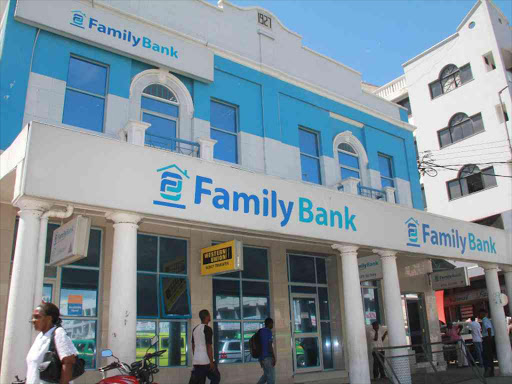
Family Bank Announces Ksh6.2 Billion Private Placement Plan

Family Bank Kenya has confirmed plans to raise about Ksh6.2 billion ($47.988 million) through a private placement to strengthen its capital position and fund its next phase of growth. The lender is targeting select sophisticated investors, with the exercise expected to close at the end of this month.
The fundraising plan follows strong performance from Family Bank Kenya, which reported a 38.6 per cent growth in net profit for the half year ended June 2025. Profit after tax rose to Ksh2.2 billion ($17.027 million), up from Ksh1.6 billion ($12.384 million) during the same period last year.
Despite this growth, the bank’s capital ratios have tightened. Its total capital to total risk-weighted assets ratio stood at 15.9 per cent, giving it only a 1.4 percentage point buffer above the statutory minimum of 14.5 per cent.
“We definitely need capital to support the rapid growth, but that capital is not for any regulatory purposes. It’s not for lending purposes since our liquidity is at 53 per cent. For every asset you de-ploy, you charge capital. That is why the ratio continues to be strained,” said Family Bank Chief Financial Officer, Paul Ngaragari.
Ngaragari added that, based on internal simulations, the lender expects to raise more than Ksh6 billion ($46.439 million) once the private placement and retained earnings are combined.
“From our simulation, we are looking at that figure to be more than Ksh6 billion ($46.439 million) to support the next growth phase. Capital support, of course, is not only Sh6 billion because we also project to have retained earnings.” he added.
The bank’s growth ambitions extend beyond Kenya. Family Bank plans to list on the Nairobi Securities Exchange (NSE) next year and is pursuing regional expansion. Uganda and the Democratic Republic of Congo have been identified as target markets within five years, and in July, its scouting team visited Tanzania to assess opportunities.
To support its expansion strategy, Family Bank Kenya engaged global consultancy McKinsey & Company to design a four-year growth plan. The consultancy fees contributed to higher operating expenses, which rose to Ksh6.7 billion ($51.858 million) for the first half of 2025.
- Stanbic Bank Announces Leadership Changes as Dr. Oigara Takes East Africa CEO Role
- Is Africa’s Biggest Bank Preparing to Enter Kenya?
- Alain Nkontchou to Acquire Nedbank’s 21.2% Stake in Ecobank for $100M
Companies seeking to raise capital can either offer securities to the public or opt for a private placement. In this case, securities are sold directly to institutional investors, high-net-worth individuals, or banks. Such placements are regulated under the Capital Markets Act and the Capital Markets Authority (CMA) rules.
Regulation 21 of the 2023 framework prohibits public advertising, restricts offers to fewer than 100 non-professional investors within 12 months, and requires issuers to target investors who meet specific income or asset thresholds.
Private placements in Kenya are a key avenue for banks to raise capital for growth, operational expansion, or debt management. The process is faster and less costly compared to public offerings and gives issuers flexibility in choosing investors.
However, securities raised through this method are less liquid, and banks risk equity dilution or higher borrowing costs depending on the structure.
Jefferson Wachira is a writer at Africa Digest News, specializing in banking and finance trends, and their impact on African economies.