The Role of Fintech Partnerships in Kenyan Banking

Kenya’s banking landscape has undergone a rapid transformation driven by fintech-bank partnerships. Known as “Silicon Savannah,” the country has become a leading fintech hub in Africa, integrating technology into financial services to expand access and improve efficiency.
The number of fintechs in Kenya as of 2025 stands at over 210, a sharp rise from fewer than 50 a decade ago. These collaborations blend the stability of traditional banking with the speed and innovation of fintechs, reshaping how Kenyans save, borrow, and transact.
The foundation of this ecosystem was laid in 2007 with the launch of M-Pesa by Safaricom. Initially built as a mobile money platform, it has grown into a financial powerhouse, processing more than 61 million daily transactions and serving over 50 million users, many of whom are unbanked.
By working with banks, M-Pesa and other fintechs have enabled seamless digital financial services that are accessible through mobile phones. The digital payments market in Kenya is projected to reach $14.54 billion by 2028, growing at a 14.1% compound annual rate, illustrating the scale of this shift.
A 2020 study examining bank-fintech partnerships in Kenya found that lenders integrating fintech solutions recorded stronger technical efficiency compared to those that did not.
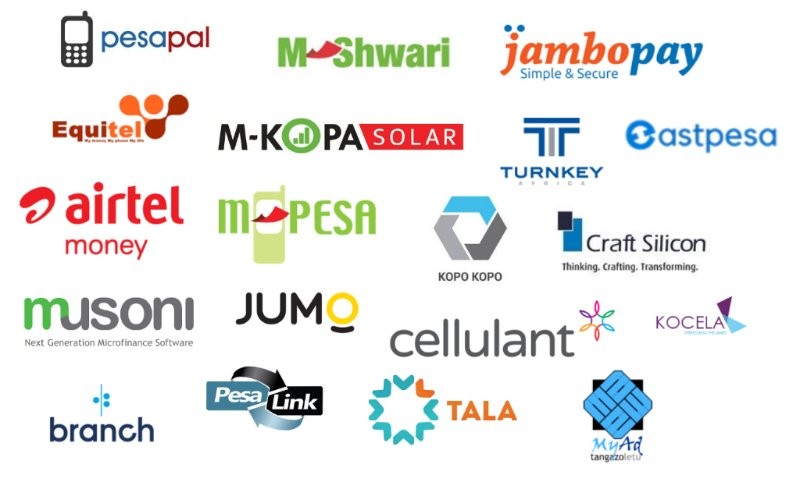
For example, Commercial Bank of Africa collaborated with M-Shwari to offer mobile savings and loans, Equity Bank introduced Equitel to power agency banking, while Kenya Commercial Bank partnered with M-Pesa to launch KCB M-Pesa.
These partnerships improved technical efficiency to 89.5% post-2015. They also reduced intermediation costs, improved managerial performance, and optimized scale.
Fintech-linked banks reported lower technical inefficiencies, ranging between 10.5% and 31.6%, due to real-time credit scoring and instant transactions. This has helped drive financial inclusion, with 83% of Kenyan adults now accessing formal financial services through mobile channels.
Fintech collaborations are fueling innovation in banking operations. Many banks are adopting AI-driven analytics, cloud infrastructure, and biometric authentication tools developed by fintech companies.
I&M Bank, for example, has worked with fintech partners to offer affordable local-currency financing and enhance cybersecurity. These efforts contributed to its recognition as “Kenya’s favorite bank” twice in customer satisfaction surveys.
Payment gateway providers like PesaPal, DPO Group, and Cellulant enable QR-code payments and e-commerce integration with banks. Craft Silicon provides mobile banking platforms for loan management, while lending fintechs such as Tala and Branch use alternative credit scoring to issue microloans to small and medium-sized enterprises that lack traditional collateral.
This embedded finance model allows services like utility payments, remittances, and loan applications to be completed inside mobile apps, reducing onboarding friction and extending reach to rural communities.
These partnerships are also unlocking new customer segments. Cross-border solutions provided by AZA Finance are lowering remittance costs for Kenyans abroad, while interoperable regulations supported by Central Bank of Kenya (CBK) are enabling open banking frameworks. This allows data sharing between banks and fintechs, making it easier for customers to access cheaper loans, savings products, and faster transactions.
In 2024 alone, fintech startups in Kenya attracted $638 million in funding, 34% of which came from debt financing. Major global firms, including Visa Inc. and Microsoft, expanded their Nairobi presence to support this growing ecosystem.
Still, the sector faces structural challenges. Legacy banking systems can slow down integrations, making it difficult to scale digital services quickly. Early-stage fintechs also face financing gaps, with foreign debt costs exceeding 18% and a seed-to-Series A funding conversion rate of just 5%.
Regulatory blind spots and cybersecurity vulnerabilities from rapid scaling expose banks to liquidity and fraud risks. Fintech Association of Kenya is actively working with regulators, investors, and banks to address these issues and improve the business environment for startups.
The next phase of this evolution points to deeper integration. FSD Kenya and Kenya Bankers Association have initiated data-sharing frameworks to support open finance models. By 2025, blockchain technology and digital identity solutions are expected to be more widely adopted, enhancing security and accessibility across the financial sector.
Jefferson Wachira is a writer at Africa Digest News, specializing in banking and finance trends, and their impact on African economies.