Ruto Signs CBK Amendment Act 2026 Allowing Emergency Liquidity Support for Banks in Crisis

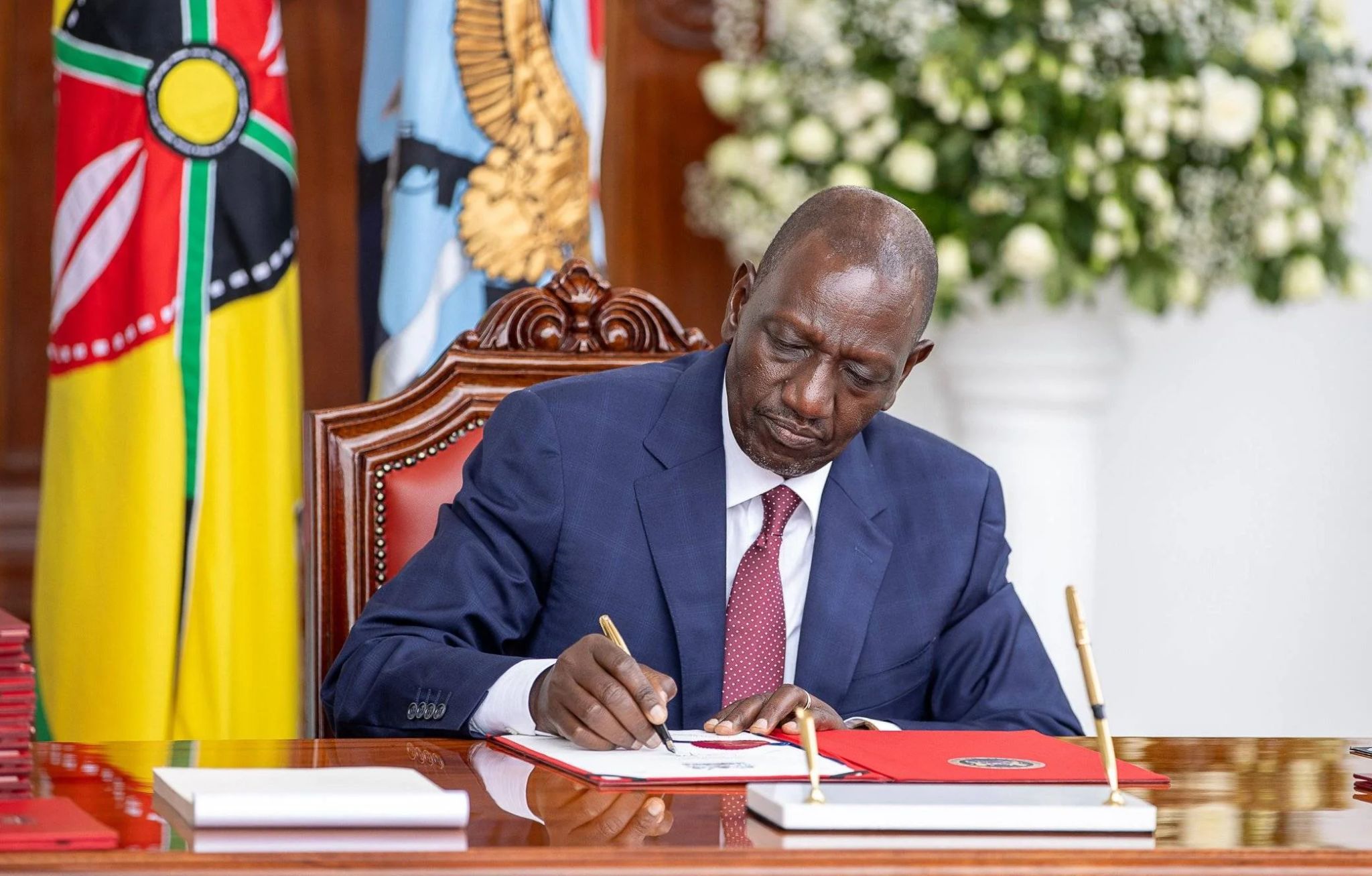
President William Ruto has signed the Central Bank of Kenya (Amendment) Act, 2026, establishing a formal legal framework that allows the Central Bank of Kenya (CBK) to provide emergency liquidity support for banks in crisis.
The new law strengthens Kenya’s financial stability framework by giving the central bank greater authority to intervene during banking sector disruptions.
However, the support will only be available to institutions that meet strict conditions, ensuring that emergency funding is used to protect the wider financial system rather than rescue failing or insolvent banks.
The amendments come as Kenya continues to strengthen financial sector regulation following previous expansions of CBK oversight to digital lenders in 2021 and non-deposit-taking credit providers in 2026.
CBK Emergency Liquidity Assistance Framework
The Central Bank of Kenya’s emergency liquidity assistance (ELA) framework is designed to provide temporary financial support to viable institutions experiencing short-term liquidity challenges that could threaten financial stability.
Under the new law, the CBK may intervene where the failure of a financial institution could create risks for the wider banking sector or the economy. However, access to emergency funding will not be automatic, as the regulator will have full discretion to assess each situation and determine whether intervention is necessary.
Financial institutions seeking assistance must demonstrate that they remain solvent and viable, meaning they have the capacity to recover and continue operating in the long term. Institutions already undergoing liquidation proceedings will not qualify for the facility.
The assistance will also require acceptable collateral that meets CBK-approved valuation standards, margin requirements and risk management conditions. This ensures that emergency lending remains protected and reduces exposure to losses.
Emergency Loans Limited to 12 Months
The amended Act introduces clearer rules on the duration of emergency liquidity support provided by the CBK.
Loans issued under the emergency assistance framework will generally be repayable within 12 months. However, the CBK may approve extensions where circumstances justify additional time, subject to regulatory conditions.
The temporary nature of the facility is intended to ensure that emergency liquidity support addresses short-term market disruptions rather than becoming a permanent source of financing for struggling institutions.
Strict Eligibility Rules to Prevent Bank Bailouts
The new framework places strong restrictions on which financial institutions can access CBK emergency funding. The central bank will only support institutions that meet key requirements, including:
- Solvency and viability: The institution must remain financially sound and capable of continuing operations.
- Systemic importance: Its failure must pose a significant risk to the stability of Kenya’s financial system.
- Adequate collateral: Any assistance provided must be backed by assets acceptable to the CBK.
- No liquidation proceedings: Institutions already undergoing liquidation cannot access emergency liquidity support.
These safeguards are designed to prevent moral hazard by ensuring banks do not take excessive risks expecting government-backed rescue packages during periods of financial difficulty.
CBK’s Financial Stability Mandate Expanded
The Central Bank of Kenya Amendment Act, 2026 expands the statutory responsibilities of the regulator beyond traditional banking supervision.
The CBK is now formally mandated to promote the liquidity, solvency, integrity and proper functioning of the financial system, alongside its existing responsibilities of maintaining price stability and regulating banks.
The move strengthens the central bank’s role as a financial stability authority, giving it clearer legal backing to respond to emerging risks within the financial sector.
Financial stability has increasingly become a priority for central banks globally as economies face risks arising from banking failures, market disruptions and rapid changes in financial technology.
CBK Gains Powers to Hold and Trade Precious Metals
The amendments also expand the range of reserve assets that the Central Bank of Kenya can hold and trade. The regulator can now acquire, hold and manage assets including gold coins, bullion, silver, platinum and other precious metals.
The expanded authority provides the CBK with additional flexibility in managing foreign reserves and supporting broader financial market development. It also aligns with efforts to strengthen Kenya’s position in the mining and precious metals sector.
CBK Empowered to Support KDIC during Banking Stress
The new law also strengthens Kenya’s financial safety net by allowing the CBK to provide loans to the Kenya Deposit Insurance Corporation (KDIC). The CBK can extend financing to KDIC for up to three years, with the loans secured against government securities.
The provision is expected to improve KDIC’s ability to respond during periods of banking sector stress, particularly when additional liquidity is required to protect depositors and maintain confidence in the financial system.
New Approval Rules for CBK Deputy Governors
The amendment updates the approval process for the appointment of CBK deputy governors. The law replaces references to approval by “Parliament” with “National Assembly”, bringing the legislation into line with the constitutional framework introduced in 2010.
Future deputy governor nominees will therefore undergo vetting and approval by the National Assembly before their appointments are finalised.
CBK Expands Training and Capacity-Building Role
The amended Act also gives the Central Bank of Kenya authority to conduct training and capacity-building programmes for its employees, public institutions, members of the public and foreign institutions.
The initiative is aimed at strengthening financial sector knowledge, improving regulatory capacity and supporting better understanding of monetary and financial systems.