How Much Kenyan Bankers Earn by Role

Banking salaries in Kenya vary widely based on experience, role, and the institution. As of early 2026, general banking positions in Nairobi typically earn between KES 65,000 and KES 155,000 per month, while senior executives at top-tier banks can earn millions annually.
Entry-Level and Junior Roles
Entry-level positions offer modest pay but have been adjusted in some banks following agreements with the Banking Insurance and Finance Union (BIFU).
Graduate clerks and trainees earn between KES 50,000 and KES 75,000 monthly, with Co-operative Bank and Standard Chartered offering salaries near the higher end.
Bank tellers earn between KES 47,742 and KES 96,251, increasing with experience; those with more than five years on the job can earn up to KES 139,000.
Sales executives often start around KES 25,000, but commissions from performance can substantially raise total earnings.
Mid-Level Professionals
Mid-level roles combine higher pay with increased responsibility. Relationship managers earn between KES 52,000 and KES 155,000 per month, while positions at Tier 1 banks such as NCBA and I&M can exceed KES 200,000.
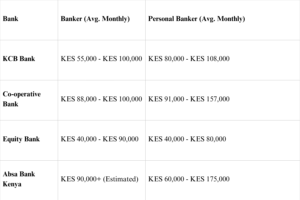
Bank officers earn roughly KES 95,000 to KES 113,000, with Central Bank of Kenya officers averaging around KES 143,000.
Operations and customer service managers earn KES 80,000 to KES 140,000, reflecting oversight of branch and operational performance.
Senior Management and Technical Roles
Senior and specialized positions command the highest salaries. Branch managers earn between KES 100,000 and KES 250,000 per month, with total packages including bonuses reaching up to KES 500,000 at larger branches.
Investment bankers earn an average of KES 80,000, but senior roles can surpass KES 160,000, excluding deal-related bonuses.
Risk and compliance managers are in high demand, earning KES 150,000 to KES 350,000, given their role in protecting banks from operational and regulatory risks.
Statutory Deductions (PAYE)
Kenyan salaries are subject to a progressive tax system. The first KES 24,000 of monthly income is generally tax-free, while higher income is taxed between 30% and 35%.
Mandatory deductions also include contributions to the National Social Security Fund (NSSF) at 6% of pensionable earnings, Social Health Insurance (SHIF) at 2.75% of gross income, and a 1.5% housing levy.
These deductions can significantly affect net pay, particularly for mid- and senior-level professionals.
Jefferson Wachira is a writer at Africa Digest News, specializing in banking and finance trends, and their impact on African economies.