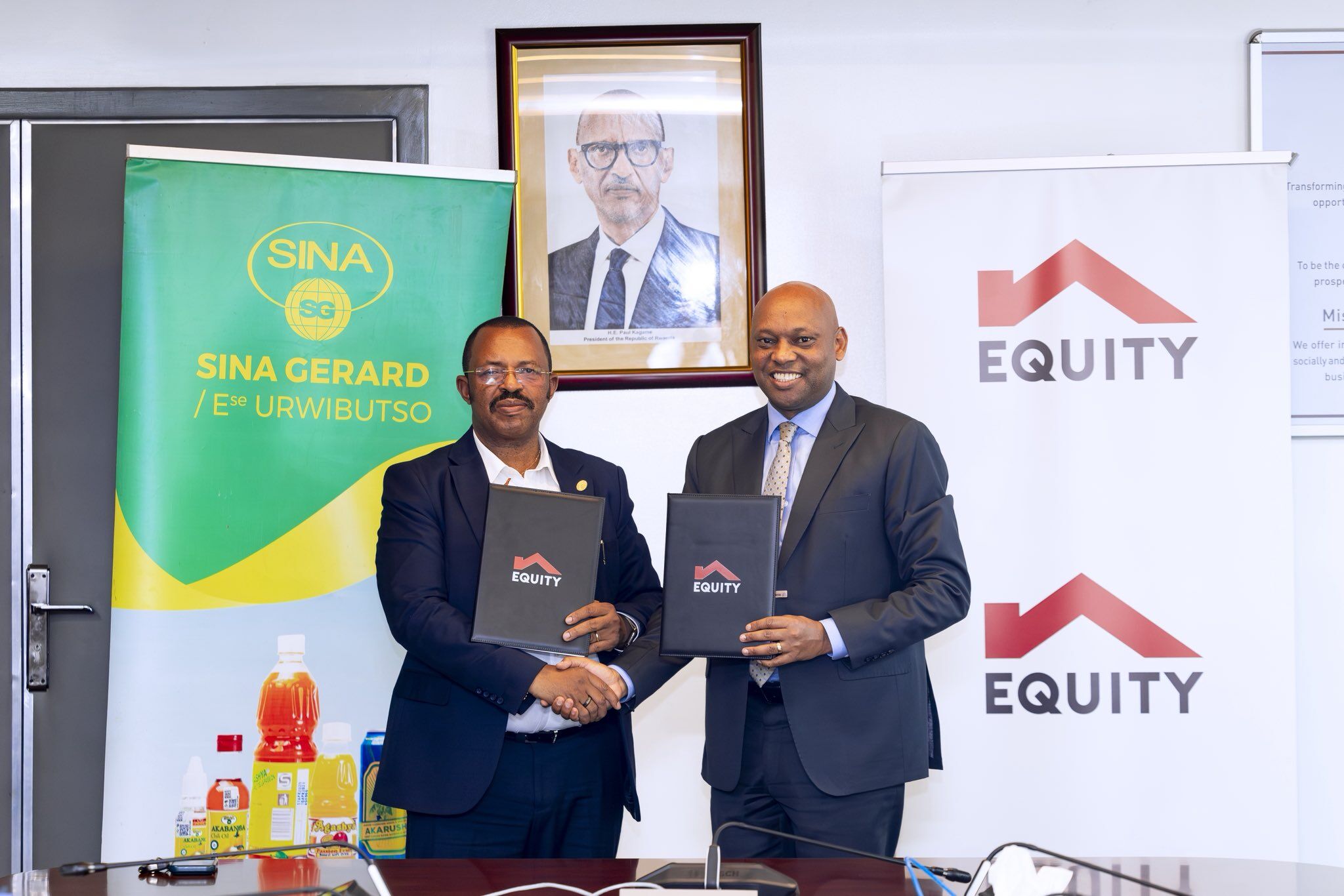
Equity Bank Rwanda Joins Forces with Entreprise Urwibutso to Empower 5,000 Farmers

Equity Bank Rwanda has partnered with Sina Gerard’s Entreprise Urwibutso to deliver financial empowerment and business transformation to over 5,000 farmers and employees, combining access to affordable credit, financial literacy, and technical tools to enhance agricultural productivity and sustainability.
The initiative targets key areas along Rwanda’s agricultural value chain. Farmers will receive training in financial management to help optimize resources and understand modern banking.
Customized loan products designed to match seasonal agricultural needs will provide affordable financing, while technical and business tools will help smallholder farmers scale from subsistence farming to commercial agribusiness.
Equity Bank Rwanda, licensed by the National Bank of Rwanda, has committed to dedicating 30% of its loan portfolio to agri-lending, reinforcing its focus on rural financial inclusion. Entreprise Urwibutso, founded in 1983, produces well-known Rwandan brands such as Akabanga chili oil, Agashya juice, and Akarusho wine.
The enterprise works with an average of 3,000 farming families and employs roughly 1,500 full-time and 1,500 seasonal workers, forming a vertically integrated supply chain for its agro-processing operations.
The partnership will cover key sectors including horticulture, staple crops, livestock and dairy, and apiculture. Farmers growing strawberries, pineapples, bananas, grapes, chili peppers, and carrots will supply raw materials for juice, wine, chili oil, and other products.
Staple crops such as maize, wheat, and soya beans feed the production of flours and biscuits, while orange-fleshed sweet potatoes are used in high-nutrition products. Livestock projects support dairy products like yogurt, and honey production will be integrated for both food and natural conditioners.
Rwanda’s agricultural sector accounts for roughly 25% of GDP and employs over 64% of the population.
By integrating finance and technical support into the value chain of established processors, the partnership aims to increase formal financial inclusion, which reached 92% in 2024, while creating sustainable business opportunities for smallholder farmers.
The program highlights a growing trend in Rwanda to combine agribusiness with structured financial services, supporting small-scale producers in accessing credit, training, and markets, while reinforcing local processing and the production of “Made in Rwanda” value-added products.
Jefferson Wachira is a writer at Africa Digest News, specializing in banking and finance trends, and their impact on African economies.