How Home Construction Loans Work in Kenya and Where to Get Financing

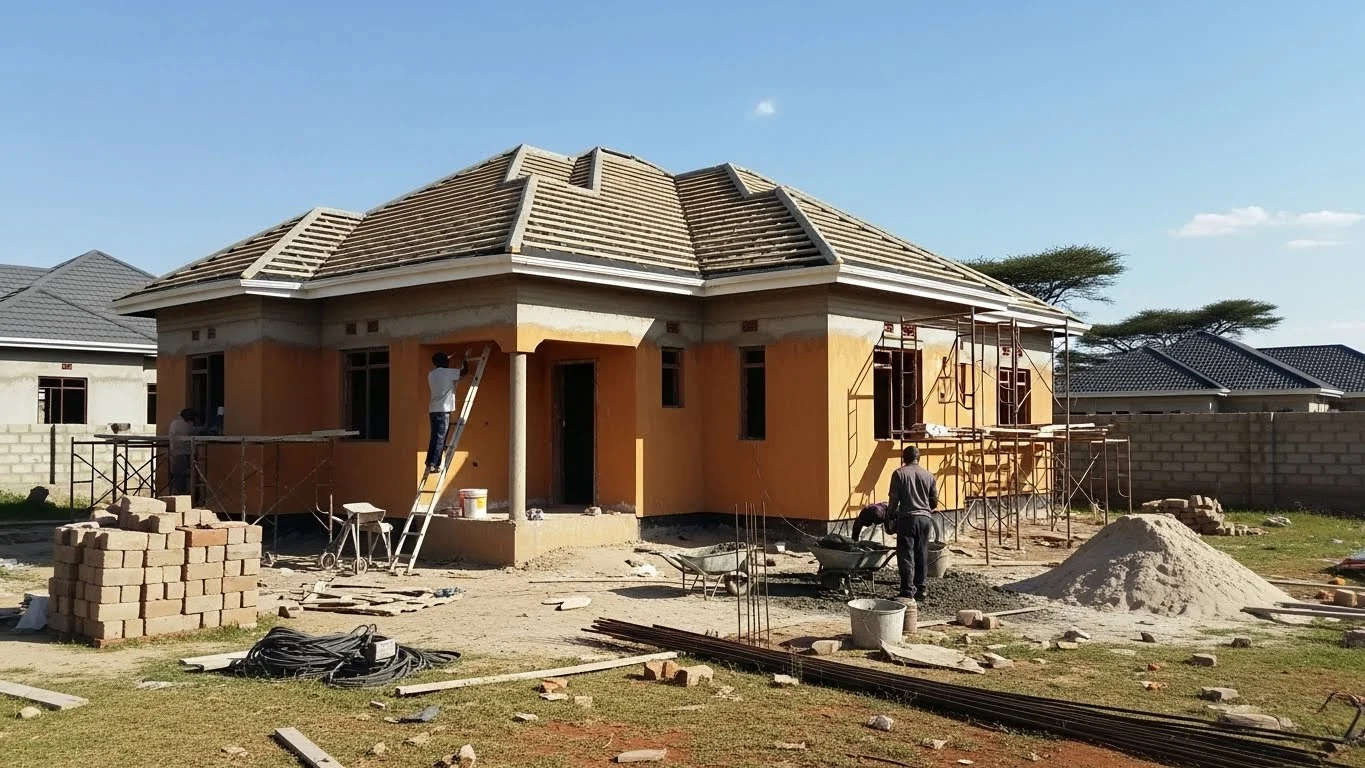
A home construction loan is a type of financing used to fund the building of a house from the ground up. Unlike a standard mortgage that pays a seller in one lump sum, a construction loan releases money in stages as construction progresses, based on verified milestones on site.
Each phase of construction, such as laying the foundation, putting up walls, roofing, and finishing is inspected before the next disbursement is approved. During the building period, borrowers usually pay interest only on the amount already used.
Once the house is completed, the facility is converted into a long-term mortgage, typically repaid over 15 to 25 years.
Here is how major banks structure their home construction loans in Kenya:
-
KCB Bank Kenya
KCB Bank Kenya structures its construction financing around two pathways depending on whether the borrower already owns land or is still acquiring it. This approach allows different categories of clients to access a home construction loan under one framework.
The bank offers a Residential Construction Mortgage for landowners and a Plot & Construction Mortgage for those purchasing land and starting development within a defined period. Both options fall under its broader construction loan product range.
Financing can reach up to 90% of the total project cost based on a detailed Bill of Quantities. Disbursement is done in up to four stages, with each release dependent on approval from a bank-appointed quantity surveyor who confirms progress on site.
Repayment terms extend up to 25 years. During construction, borrowers pay only interest, followed by a short grace period after completion before full repayment begins. This helps ease pressure on cash flow while the project is ongoing.
Additional costs include processing fees, legal charges, stamp duty, and insurance cover for both the loan and the property.
-
Absa Bank Kenya
Absa Bank Kenya takes a flexible approach to home construction loans, offering financing that automatically transitions into a standard mortgage once construction is completed.
Its standard construction loan product finances up to 90% of building costs, with some cases allowing higher coverage depending on land value. Through KMRC-backed housing finance, borrowers may access up to 105% of project costs, capped at KES 10.5 million, with the extra amount covering legal and setup expenses.
Interest rates vary depending on the product. Standard loans typically range between 13% and 14%, while KMRC-backed facilities are fixed at around 9% annually, making them more predictable for long-term planning.
Funds are released in phases across an estimated 12-month construction period. Larger projects require fixed-price building contracts to manage cost variations during development. Borrowers also benefit from a grace period of up to nine months before full repayments begin.
-
Co-operative Bank of Kenya
Co-operative Bank of Kenya channels its home construction loans through the GoodHome Mortgage and KMRC-supported schemes, targeting both salaried workers and self-employed borrowers.
Borrowers can finance up to 90% of the total project cost, whether building from scratch or combining land purchase and construction. KMRC-linked loans offer a more affordable construction loan option, with interest rates of about 9.9% on a reducing balance.
Repayment terms depend on income type. Salaried clients may access up to 25 years, while self-employed borrowers are limited to 12 years, based on assessed repayment capacity.
A six-month interest-only period is provided during construction. The bank also allows joint applications, enabling spouses to combine incomes to qualify for higher loan amounts.
-
Equity Bank Kenya
Equity Bank Kenya home construction loans are designed around detailed project evaluation and borrower financial capacity, with a stronger focus on documentation and upfront preparedness.
The bank finances up to 70% of the Bill of Quantities, requiring borrowers to contribute a larger share of the project cost upfront. While this threshold is higher than most lenders, there is no strict maximum loan ceiling for qualified applicants.
Repayment periods are shorter compared to other lenders, with a maximum tenure of 10 years for residential construction. Interest rates typically range between 13% and 15.5%, depending on market conditions and borrower profile.
Applicants must provide comprehensive documentation, including approved architectural plans, title deed, National Construction Authority certification, registered professionals for the project, and a signed construction contract. This makes the product suitable for well-prepared developments with clear project structures.
Jefferson Wachira is a writer at Africa Digest News, specializing in banking and finance trends, and their impact on African economies.