Kenyan Banks Partner WWF-Kenya to Restore 56 000 Mangroves in Kilifi

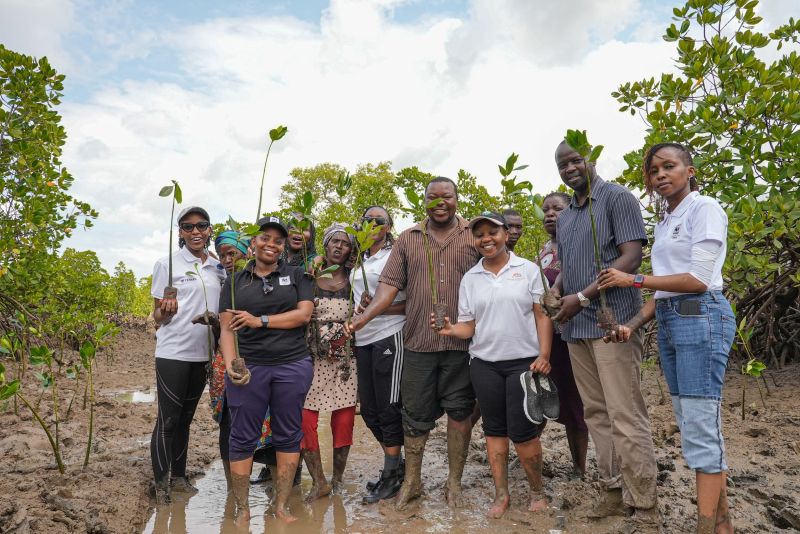
The Kenya Bankers Association, through its KBA Centre for Sustainable Finance and Enterprise Development (CSFED), has partnered with WWF-Kenya to restore 56 000 mangroves across six hectares in Kilifi County as part of activities marking the International Day for Biodiversity.
The restoration programme is being implemented in Mtwapa, Takaungu, and Kilifi Creek, areas identified as environmentally sensitive coastal ecosystems facing increasing degradation and climate pressure.
Banks participating in the exercise include Absa Bank Kenya, Equity Bank Limited, Guaranty Trust Bank Kenya, Diamond Trust Bank, Access Bank Plc, KCB Bank Group, NCBA Group, Victoria Commercial Bank, and Postbank.
The initiative is aimed at strengthening coastal climate resilience while advancing nature-based climate adaptation solutions through ecosystem restoration.
Biodiversity Targets and National Climate Goals
The mangrove restoration exercise supports Kenya’s National Biodiversity Strategy and Action Plan (NBSAP), the Kunming-Montreal Global Biodiversity Framework, and the Government of Kenya’s 15 Billion Tree Growing Programme.
Kenya’s NBSAP serves as the country’s primary policy framework for biodiversity conservation, ecosystem restoration, and sustainable use of biological resources. The strategy also guides Kenya’s commitments under the United Nations Convention on Biological Diversity.
The current NBSAP framework runs through 2030 and has been updated to align with the Kunming-Montreal Global Biodiversity Framework, a global agreement focused on reversing biodiversity loss by the end of the decade.
The Kilifi mangrove restoration project forms part of a localized environmental and socio-economic intervention targeting degraded coastal ecosystems within Kilifi County, where forest cover remains low at approximately five percent.
The six-hectare restoration exercise also contributes to the larger Mtwapa, Takaungu, and Kilifi (MTAKIMAU) Mangrove Restoration Plan covering the 2024–2028 period.
Scientific Restoration and Legal Framework
The programme operates within Kenya’s environmental protection laws under Section 47(1) of the Forest Conservation and Management Act, 2016, which provides the legal basis for cooperation between the Kenya Forest Service and community forest groups through Forest Management Agreements.
Before restoration begins, scientists from the Kenya Forestry Research Institute and the Kenya Marine and Fisheries Research Institute conduct ecological assessments to identify degraded areas and determine suitable mangrove species for different soil and salinity conditions.
The assessments help guide the planting of indigenous mangrove species such as Rhizophora mucronata and Avicennia marina, which are among the dominant species along Kenya’s coastline.
Community-Led Conservation Model
The restoration programme is also structured around community participation through the Mtwapa-Takaungu-Kilifi Community Forest Association (MTAKIMAU CFA), which oversees on-the-ground restoration activities.
Under the model, local youth, women, and community groups are trained on Community-Based Ecological Mangrove Restoration techniques to support long-term conservation and monitoring activities.
The initiative also introduces an income-generation component by involving local communities in nursery development and restoration work, helping reduce dependence on mangrove harvesting for fuelwood and timber.
Mangroves play a critical role in coastal protection by reducing shoreline erosion, supporting marine biodiversity, storing carbon, and acting as natural buffers against storm surges and flooding.
Environmental stakeholders have increasingly identified mangrove restoration as one of the most cost-effective nature-based approaches for addressing climate adaptation challenges in vulnerable coastal regions.
Jefferson Wachira is a writer at Africa Digest News, specializing in banking and finance trends, and their impact on African economies.