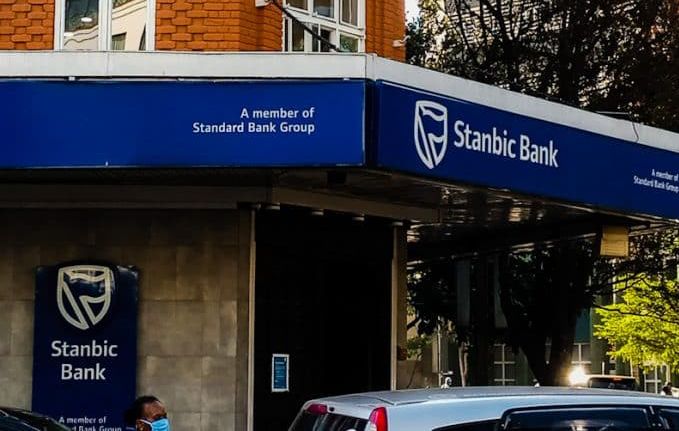
Stanbic Holdings Profit Holds at KSh 13.72 Billion in 2025 as Revenue Drops

Stanbic Holdings Profit after tax for 2025 stood at KSh 13.72 billion, unchanged from the previous year, as lower interest and non-interest income offset gains from reduced credit impairment charges.
Total revenue declined 3.1% to KSh 38.51 billion, while credit impairment charges fell 47.5%, helping cushion earnings during a period when banks faced weaker credit demand and shifting economic conditions.
The lender’s balance sheet expanded 19% to KSh 541.25 billion, driven by strong lending activity and deposit growth. Loans and advances increased 24.4% during the year, while customer deposits rose 23.5%.
The board proposed a final dividend of KSh 18.55 per share, bringing the total dividend per share for the year to KSh 22.35, a 7.8% increase compared with 2024.
Revenue Pressure Amid Lending Expansion
Despite the flat profit outcome, the bank recorded strong expansion in its loan portfolio and customer base. The number of customers increased to 315,000 in 2025 from 291,000 a year earlier.
The bank also continued expanding its physical network, increasing its presence to 44 branches and service centers across Kenya.
Performance during the year was uneven. In the first quarter of 2025, profit declined 16.6% to KSh 3.33 billion. By the third quarter, profit after tax stood at KSh 9.38 billion, down 7.47% compared with the same period in 2024.
Subsidiaries Support Earnings
Bancassurance operations reported a 49% increase in profit after tax during the first half of 2025, while brokerage unit SBG Securities posted a 59% increase in earnings over the same period.
These segments have become an increasingly important source of non-lending revenue for the group as competition in traditional banking products intensifies.
Management on Economic Conditions
Stanbic Chief executive officer Joshua Oigara said the bank maintained stable profitability despite operating in a challenging economic environment.
He said the Kenyan economy remained stable but faced “persistent headwinds,” including slow private sector credit uptake, high fiscal deficits and geopolitical risks affecting global markets.
Oigara said the bank maintained its earnings level by focusing on client support and strengthening risk management practices while navigating shifting market conditions.
He added that the bank continues to build foundations for sustainable earnings and expects the current momentum to translate into stronger returns for shareholders over time.
Credit Portfolio and Risk Management
Management attributed the sharp drop in credit impairment charges to tighter oversight of the loan book and improved portfolio management.
Leadership said the group focused on protecting its earning portfolio while maintaining disciplined credit management, which helped reduce provisioning levels during the year.
Digital and Trade Initiatives
At its 2025 annual general meeting, the board also discussed the launch of the Africa-China Trade Platform, a digital ecosystem intended to support companies involved in trade between the two regions.
The platform is designed to connect businesses to financing and trade services as commercial links between Africa and China continue to expand.
The bank’s regional operations also contributed to group performance. Oigara noted that its South Sudan unit maintained operations through the oil-driven economy, supporting clients despite regional challenges.
Outlook for 2026
Management said early indicators suggest improving economic conditions heading into 2026. The bank expects lending growth to recover, targeting a 14% to 16% expansion in its loan book, with focus areas including housing, manufacturing and trade.
Stanbic said stronger credit demand in these sectors could support earnings growth as Kenya’s economy stabilizes and investment activity picks up.
Jefferson Wachira is a writer at Africa Digest News, specializing in banking and finance trends, and their impact on African economies.